
- Introduction
- 1. What Exactly Is the Five-Color Pond in Jiuzhaigou?
- 2. Where Do the Colours Come From?
- 3. It Doesn't Freeze in Winter
- 4. Tickets, Opening Hours and Booking Rules
- 5. The Easiest Way to Reach the Pond
- 6. Best Season, Best Time of Day
- 7. Five-Color Pond or Five Flower Lake?
- 8. What to Prepare Before You Go
- 9. Frequently Asked Questions
- 10.Conclusion
- 11.Five-Color Pond in Jiuzhaigou: Quick Facts for Visitors
Introduction
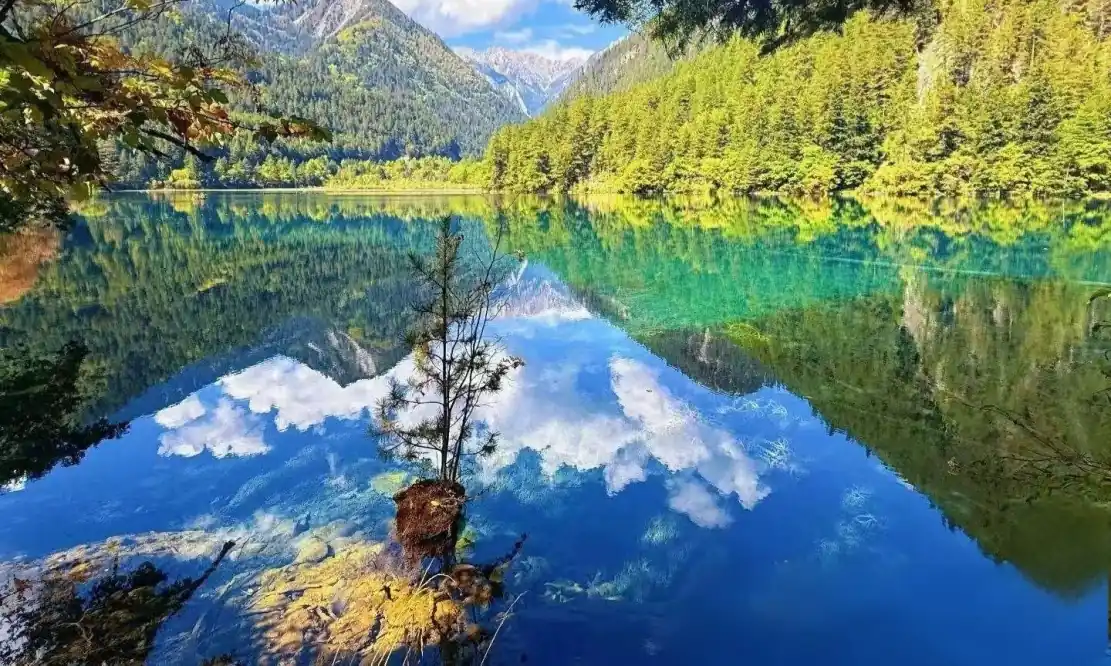
If you’re planning your first trip to Jiuzhaigou, you’ll see the name Five-Color Pond in Jiuzhaigou come up again and again. It’s the smallest body of water in the entire scenic area, yet it sits near the top of almost every must-see list. Many visitors walking down from Changhai Lake (长海) stop still the moment they see it, because the water really does look like the photos. This guide answers the questions foreign visitors ask most: what makes the Five-Color Pond in Jiuzhaigou special, how to reach it, what the ticket costs, when the gates open, and which season suits you best.
1. What Exactly Is the Five-Color Pond in Jiuzhaigou?
Here’s the short version: it’s small, but the colours are remarkably intense.
Official figures put the Five-Color Pond in Jiuzhaigou at about 2,995 metres above sea level, though some sources give 3,010 metres. It runs roughly 100 metres long and 60 metres wide, reaches 6.6 metres at its deepest point, and covers about 5,645 square metres. Among the many lakes scattered through Jiuzhaigou (九寨沟), it ranks as one of the smallest.
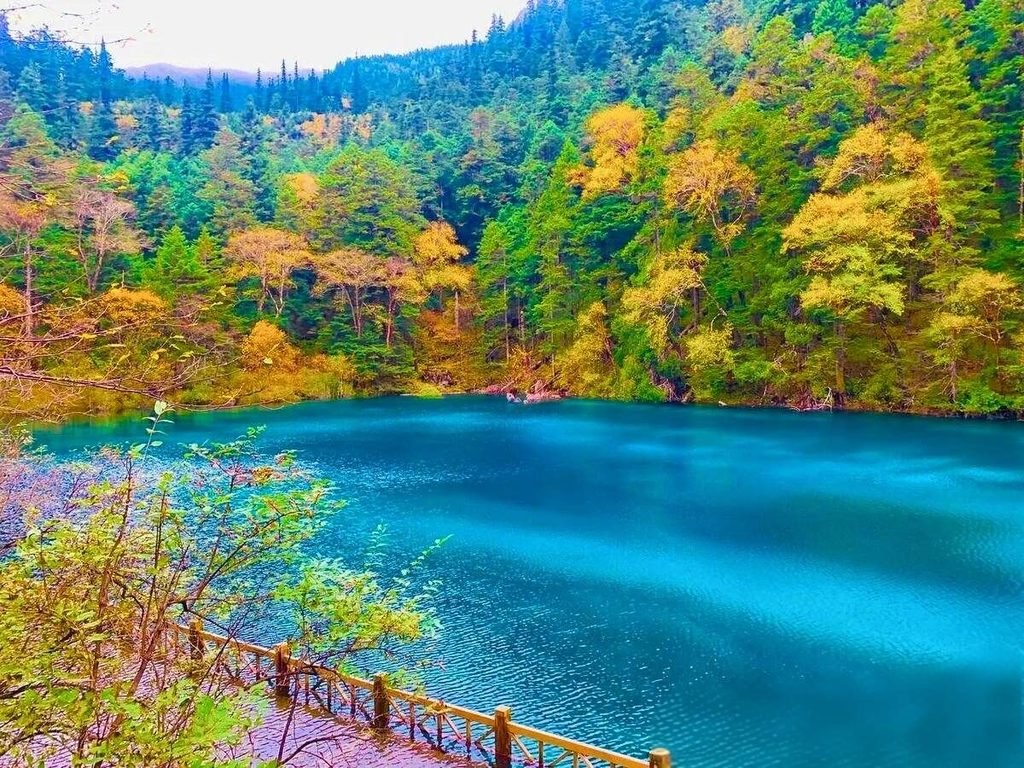
It sits in Zechawa Valley (则查洼沟). From the Changhai Viewing Platform (长海观景台), follow the wooden boardwalk down for 800 metres to 1 kilometre and you’ll reach the water’s edge. The walk takes 15 to 20 minutes and is mostly downhill.
So you don’t need to set aside a whole day. Most visitors pair it with Changhai and finish the side trip in 1.5 to 2 hours.
2. Where Do the Colours Come From?
The answer isn’t a camera filter. It’s the purity of the water.
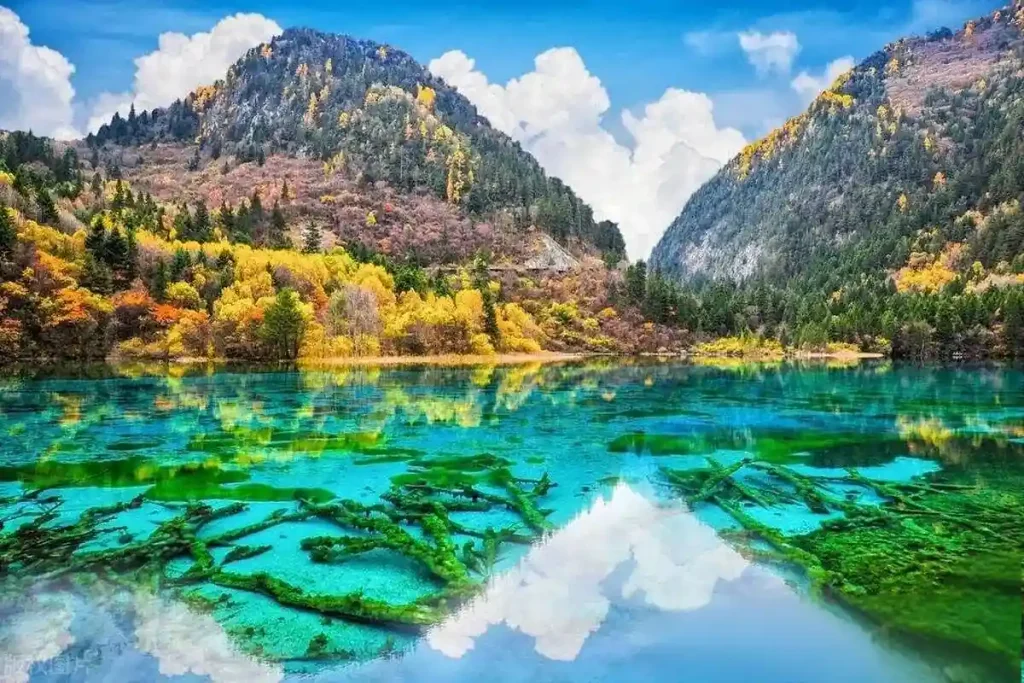
Jiuzhaigou’s water begins as melted snow high in the mountains and filters through limestone before resurfacing. It carries almost no suspended sediment, organic matter or plankton, which makes it exceptionally clear. Light that enters such water is scattered, and blue light scatters most strongly, so the lake reads as blue-green.
Two further layers build on that base:
- The bed is pale grey travertine (钙华), patterned with ridges and shallow grooves.
- Aquatic plants such as spirogyra (水绵), charophytes (轮藻) and small ferns grow across the bottom, and each species carries a different amount of chlorophyll.
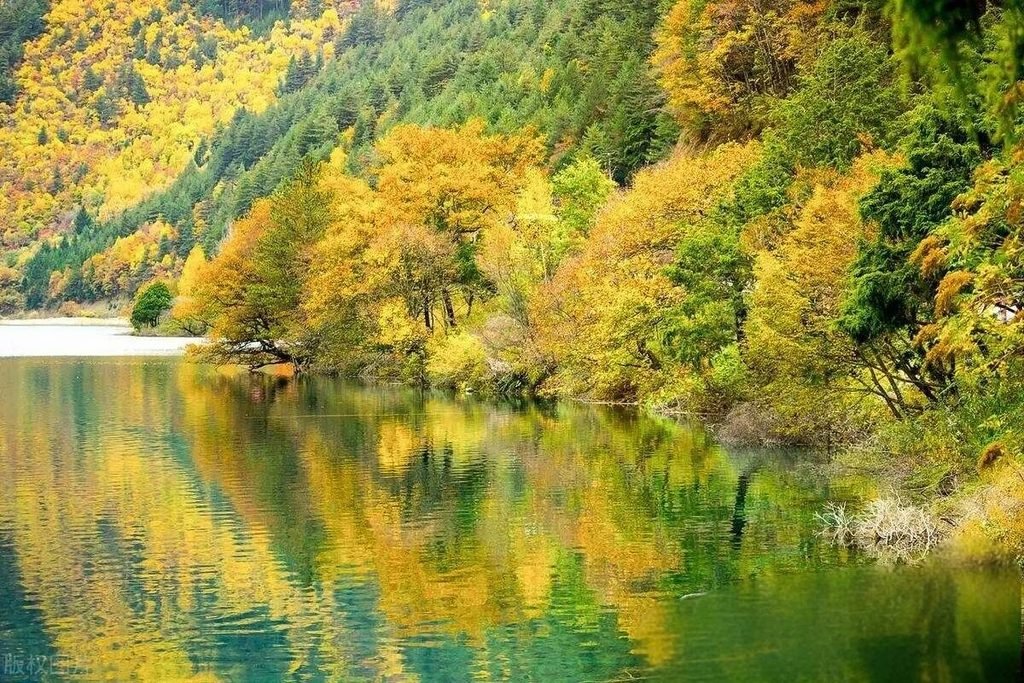
The result is one sheet of water reading as royal blue in one corner, emerald in the next, with pale yellow or orange tones in between. Shift your angle or wait for the sun to move and the palette shifts with it. Locals will tell you the colours peak around noon, when the light comes straight down.
One detail worth knowing: the Five-Color Pond in Jiuzhaigou has no surface outlet. Its water seeps underground from Changhai Lake (长海) higher up the valley. When Changhai’s level drops, the pond visibly shrinks. That’s a normal seasonal cycle, and it refills once the rains arrive.
3. It Doesn’t Freeze in Winter
This is the feature that surprises people most.
Across Jiuzhaigou in winter, many lakes seal over with ice, the boardwalks lie under deep snow, and temperatures often fall below -10°C. Yet the Five-Color Pond in Jiuzhaigou keeps flowing through most of the winter, steam lifting off the surface while ice and snow rim the shore.
The reason is that same underground supply. Water rising from deep below arrives a few degrees warmer than surface water, and the pond is small with a constant through-flow, so it rarely freezes solid.
If you come in winter, expect very slippery boardwalks. Wear shoes with real grip and bring walking poles.
4. Tickets, Opening Hours and Booking Rules
Start with the rule that catches people out: there are no ticket counters at the gate. You must book online in advance under your real name.
The official channels are the WeChat Mini Program “Jiuzhaigou Tourism Official Platform” (九寨沟旅游官方平台) and the Aba Tourism website (阿坝旅游网). Tickets go on sale 14 days ahead, with new slots released daily at 8:00 a.m. In peak season they often sell out within hours, so set an alarm.
| Item | Peak season (1 April – 15 November) | Off-season (16 November – 31 March) |
|---|---|---|
| Admission | ¥190 per person | ¥80 per person |
| Shuttle bus (required) | ¥90 per person | ¥80 per person |
| Total | ¥280 per person | ¥160 per person |
| Insurance | ¥10 per person, optional | ¥10 per person, optional |
| Daily visitor cap | 41,000 | About 23,000 |
| Entry window | 8:00 a.m. – 2:00 p.m. | 8:30 a.m. – 2:00 p.m. |
| Closing time | 6:00 p.m. | 6:00 p.m. |
Figures follow official scenic area notices.
A few pitfalls to avoid:
- Entry stops at 2:00 p.m. sharp. Don’t plan on arriving at the last minute.
- You can’t skip the shuttle bus. The valley roads stretch more than 60 kilometres, far too far to walk in a day.
- Foreign visitors book under their real names too. Have your passport details ready; the accepted document types are whatever the official platform lists.
- The rule is “tour inside, sleep outside”. Nobody stays overnight in the valley.
- Drones are banned without prior authorisation.
Off-season has one genuine bargain: pay a ¥20 handling fee and you can re-enter the next day. Two days then cost ¥180 in total, or ¥90 a day.
5. The Easiest Way to Reach the Pond
The route itself is straightforward: Valley Entrance (沟口) → Nuorilang Central Station (诺日朗中心站) → Changhai Lake (长海) → the pond.
- Board the shuttle at the Valley Entrance Visitor Center (沟口游客集散中心). Private cars are not allowed in.
- At Nuorilang Central Station, change to the Changhai-bound bus. It runs almost non-stop to the terminus.
- Spend 20 to 30 minutes at the Changhai Viewing Platform, around 3,100 metres up and one of the highest points in the park.
- Walk 800 metres down the boardwalk and allow about 20 minutes at the water.
- Catch the shuttle back to Nuorilang and carry on to the other valleys.
The official one-day order is: Rize Valley (日则沟) in the morning, lunch and a transfer at Nuorilang, Zechawa Valley in the afternoon for Changhai and the pond, then out along Shuzheng Valley (树正沟) towards evening.
Two reminders:
- Changhai sits at 3,100 metres and the pond at roughly 2,995 metres. That’s serious altitude. Once you arrive, walk slowly, don’t run, and sip water rather than drinking a lot at once.
- Snow and ice make the boardwalk treacherous. Traction matters more than style.
6. Best Season, Best Time of Day
| Season | State of the pond | Best for |
|---|---|---|
| April – May | Snowmelt raises the level; water is crystal clear | Travellers who want fewer crowds |
| July – August | Full flow, around 18°C, a genuine escape from the heat | Families |
| Late September – early November | Autumn colours at their peak, mirrored in the water | Photographers |
| Mid-November – March | Off-season prices, thin crowds, water still unfrozen | Budget travellers who can handle the cold |
The timing of the autumn colour depends on temperature and rainfall. Mid-to-late October into early November is usually the peak, but treat that as a guideline rather than a promise.
On clear days the colours are richest between 10:00 a.m. and 3:00 p.m., when the sun is high. Under cloud or rain the blues turn greyish, so go in with that expectation.
7. Five-Color Pond or Five Flower Lake?
This is the comparison foreign visitors get stuck on, because the two names sound so alike.
Five Flower Lake Jiuzhaigou (五花海) lies in Rize Valley at about 2,462 metres. With a surface of roughly 90,000 square metres it’s the largest lake in the park and the richest in colour, and the calcified tree trunks below the surface make it a wide-angle photographer’s dream.
The Five-Color Pond in Jiuzhaigou occupies about a tenth of that area in Zechawa Valley. What it lacks in size it makes up for in concentration. The colours are tighter, the reflections closer, and it rewards a camera with a short lens.
If you truly have time for only one, most people would pick Five Flower Lake for the sheer impact. But both valleys sit inside the same ticket, and a single day covers them both, so choosing is rarely necessary.
With two days you can spend day one in Jiuzhaigou and day two at Huanglong (黄龙), or take the slower pace of a 3 Day Jiuzhaigou Tour and give yourself time to acclimatise while seeing both valleys properly. To bundle in Huanglong and Songpan Ancient Town (松潘古城), take a look at a 4 Day Jiuzhaigou Tour. And if you’d rather not plan it yourself, one of our Jiuzhaigou Tours handles ticket reservations and in-valley transport for you.
Still deciding on dates or a route? Message our team on WhatsApp or drop us an email from this site, and we’ll send you a day-by-day plan built around your departure date.
8. What to Prepare Before You Go
- Getting there: The Sichuan–Qinghai high-speed rail does Chengdu East (成都东站) to Huanglong-Jiuzhaigou Station (黄龙九寨站) in about 1 hour 39 minutes at fastest. From there the official shuttle takes roughly two hours to the valley entrance, so allow about 3.5 hours door to door. It beats an eight-to-ten-hour bus by a wide margin.
- Clothing: Days and nights differ sharply at altitude. Short sleeves plus a light layer work by day; you’ll want something warmer for dawn and dusk. Choose light, non-slip footwear.
- Altitude: The park runs from 2,000 to 3,100 metres and most people feel no more than mild breathlessness. Walk slowly on arrival and skip the running.
- Food: Nuorilang Central Station is the only place to eat inside the valley. Carry chocolate and water.
- Rules: Stay on the boardwalks. Don’t step into the water, feed the fish, smoke or bring pets.
9. Frequently Asked Questions
Q1: Does the Five-Color Pond in Jiuzhaigou need its own ticket?
No. It’s covered by the standard Jiuzhaigou entry ticket: ¥280 in peak season (¥190 admission plus ¥90 shuttle) and ¥160 off-season (¥80 plus ¥80).
Q2: How long does it take to get from the entrance to the pond?
About 40 to 50 minutes by shuttle from the entrance to Nuorilang Central Station, then around 30 minutes to the Changhai terminus, plus 15 to 20 minutes on the boardwalk. Allow roughly 1.5 hours each way and aim to enter before 8:00 a.m.
Q3: Does the pond freeze? Is it worth visiting in winter?
Most winters the water stays open while everything around it is locked in ice and snow, which makes for extraordinary photos. The trade-off is temperatures below -10°C and slippery boardwalks. With the right gear and some flexibility, it’s worth the trip.
Q4: What if the pond looks low?
Winter and spring bring little rain, so the level drops noticeably. It’s normal, and it recovers once the May rains start. If a full pool matters to you, come from June onwards or in autumn.
Q5: Can foreign visitors book with a passport?
Bookings are real-name and online. For international visitors, check the latest guidance in the WeChat Mini Program “Jiuzhaigou Tourism Official Platform” on accepted documents and the booking flow. Reserving 7 to 14 days ahead is safest, since peak-season dates sell out early. If you’d rather not deal with it, send us your passport details and our agency will handle the reservation.
10.Conclusion
The Five-Color Pond in Jiuzhaigou covers very little ground, but nowhere else in the valley do the colours run this deep. Its character comes down to three things: water clear enough to read the stone patterns on the bed, travertine and algae splitting that water into several distinct blues, and a surface that stays open through the coldest months.
Pair it with Changhai. Spend the morning at Five Flower Lake in Rize Valley, come here in the afternoon, and a single day gives you both of Jiuzhaigou’s signature water colours.
Entry fees, opening hours and visitor caps are adjusted from time to time, so confirm the latest figures on the official platform before you travel. If you’d like a route built around your own pace, or a hand with tickets and transport inside the valley, contact our team any time on WhatsApp or by email from this site and we’ll send over a detailed plan and quote.
11.Five-Color Pond in Jiuzhaigou: Quick Facts for Visitors
| Item | Details |
|---|---|
| Location | Zechawa Valley (则查洼沟), Jiuzhaigou (九寨沟), Sichuan, China |
| Elevation | approx. 2,995 m (9,826 ft) |
| Size | 100 m long × 60 m wide, max depth 6.6 m, about 5,645 m² |
| Closest landmark | 800 m – 1 km downhill from Changhai Lake (长海) viewing platform |
| Walking time | 15 – 20 minutes on boardwalk, mostly downhill |
| Suggested stay | 20 – 30 minutes (1.5 – 2 hours with Changhai) |
| Ticket, peak season (1 Apr – 15 Nov) | ¥280 = ¥190 admission + ¥90 shuttle bus |
| Ticket, off-season (16 Nov – 31 Mar) | ¥160 = ¥80 admission + ¥80 shuttle bus |
| Insurance | ¥10 per person, optional |
| How to book | Online real-name reservation only, no ticket counters at the gate |
| Booking window | 14 days ahead, new slots daily at 8:00 a.m. |
| Entry hours | 8:00 a.m. – 2:00 p.m. peak / 8:30 a.m. – 2:00 p.m. off-season |
| Closing time | 6:00 p.m. year-round |
| Daily visitor cap | 41,000 peak / about 23,000 off-season |
| Shuttle bus | Required, valley roads exceed 60 km |
| Route | Valley Entrance (沟口) → Nuorilang Central Station (诺日朗中心站) → Changhai Lake (长海) → Five-Color Pond |
| One-way travel time | about 1.5 hours from the entrance |
| Off-season perk | +¥20 handling fee allows next-day re-entry (¥180 for 2 days) |
| Best season | Late Sept – early Nov for autumn colours; Apr – May for clear water and fewer crowds |
| Best time of day | 10:00 a.m. – 3:00 p.m. on sunny days |
| Winter note | The pond rarely freezes, but boardwalks get slippery, bring shoes with grip |
| Good to know | Stay on boardwalks, no drones without permission, no food inside except at Nuorilang |

3 Comments
Five-Flower Lake is arguably one of Jiuzhaigou’s iconic core attractions. It has long been hugely popular among all the photo spots and consistently earns great reviews.
Its water is truly unique — not a plain shade of blue or green, but with natural gradient tones. The shallows glow emerald green, while deeper areas take on blue-purple hues, looking refreshing under sunlight.
Make sure to visit Tiger Mouth Viewing Platform. The elevated overlook lets you take in the lake’s full shape and colour layout. It is an excellent viewpoint, perfect for great casual shots.
The wooden boardwalk along the lakeside is ideal for a leisurely stroll. You can admire the crystal-clear water up close and sometimes spot submerged dead tree trunks, adding a special charm.
Arrive early in the morning for fewer crowds and soft light, so you can take photos without jostling for space.
It is not the kind of site you have to treat like a pilgrimage, yet it perfectly showcases the legendary water beauty of Jiuzhaigou. If you tour Jiuzhaigou, this spot is well worth a stop.
구재구는 서천을 대표하는 산수 명소입니다. 푸른 호수, 겹겹이 이어진 폭포, 채림, 설봉이 어우러져 그림을 이루고, 호수 물은 맑아 바닥이 보이며 빛에 따라 색깔이 다채롭게 변합니다. 걸음마다 새로운 풍경이 펼쳐져 신선경에 들어선 듯합니다.
관광지 셔틀버스 노선이 잘 갖춰져 있어 관람하기 편리합니다. 다만 고도가 높고 걸어야 하는 산책로가 많아 체력 소모가 큰 편입니다. 사계절마다 각기 다른 매력이 있으며, 가을의 채림이 특히 감탄을 자아냅니다. 직접 찾아와 봐야만 자연이 빚어낸 이 절경을 진정으로 느낄 수 있습니다.
Jiuzhaigou is absolutely stunning. It lives up to its reputation for autumn colorful forests. The woods reflect in the already breathtaking lakes, making the scenery even more gorgeous.
Visitor numbers are extremely high during the peak colorful-leaf season, yet the park’s traffic management is excellent. We barely waited for the shuttle buses each time. It’s just that there are simply so many people.